
International Journal of HRD Practice, Policy and Research 2016, Vol 1 No 2: 93-99
doi: 10.22324/ijhrdppr.1.119
HRD Forum
McDonald’s: an HRD laboratory?
David Fairhurst, Corporate Executive Vice President, Chief
People Officer for the McDonald’s Corporation,
in interview with Rick Holden, Editor, IJHRDPP&R
David Fairhurst is McDonald’s Chief People Officer — a post he has held since October 2015 — with responsibility for leading the organization’s HR, Training, and Leadership Development functions in 120 countries worldwide. Based in Oak Brook, Illinois he reports directly to McDonald’s President and Chief Executive Officer, Steve Easterbrook. In this interview we explore HRD practice within the business and the insights McDonald’s may be able to offer a wider community of HR/HRD professionals.
To begin our discussion, we explore the qualities that make McDonald’s an interesting ‘HRD laboratory’ (an HRD laboratory which, David adds with a smile, “also makes great hamburgers”!). This also provides a framework for four of the broader HRD themes David sees emerging globally — and the HRD practices that have been introduced by McDonald’s in these areas.
Firstly, there is global scale. McDonald’s and its franchise partners operate over 36,000 restaurants employing over 1.9m people, making McDonald’s the world’s largest private sector employer. This kind of scale means that we have the opportunity to test and assess HR innovations in a very rigorous way across multiple markets and with significant sample sizes.
However, at the same time, over 80% of its restaurants are operated by local franchisees — each one, in effect, operating like an SME.
David highlights a further key feature of these local franchises; normally they are based on a long-term commitment which minimizes upheaval and instability, often evident in the SME sector. Thus, the foundation of the wider McDonald’s organization is solid and secure — a fact which is embodied in McDonald’s philosophy of the “three-legged stool”: the company, the franchisees, and their suppliers aligning around a shared mission and vision.
These qualities — global scale and local franchisees – David argues, have profound implications on the development of HR initiatives. Initiatives which on the one hand need to leverage our scale, but on the other need to be implemented by small local businesses which typically have little or no dedicated HR/HRD resource.
The third key quality is that McDonald’s is at pivotal phase in its economic life cycle. In recent years, growth has stalled. The business is now in what David calls a “turnaround phase” and which has seen a significant amount of re-organization and re-structuring. However, in preparation for moving from turnaround to renewed growth David, with colleagues, has established a People Strategy (GPS), the function of which is clear: “to drive growth”. The GPS is based on four critical challenges McDonald’s faces in each of its markets worldwide: culture transformation; creating a robust talent pipeline; leadership capability at all levels in the organization; and access to the people they need (Figure 1).
Figure 1: Global People Strategy, McDonald’s
I suggest that, given the context we have discussed, the alignment of corporate / global HRD policy and practices with the ‘local’ feature of McDonald’s operation is surely a major tension. David agrees to a point, but argues that this tension also creates a positive ‘dynamic’ because there is the minimum of “top-down”; there is “no corporate bluff”. Indeed, David stresses the importance of McDonald’s “bottom-up” approach which enables the voices of customers, franchisees, and employees from every Market to be heard. To achieve this, McDonald’s rigorously collects on an ongoing basis a raft of market and people data (see also Technology below) which feeds into an annual planning process to determine the organization’s strategic response in line with the overarching GPS to drive growth. To ensure the alignment of practices across the organization, this planning process is driven at market level by “People Teams” which include representatives from both the company-owned and franchised businesses. These market strategies are then aggregated and reviewed at a global level to ensure that any opportunities to leverage scale and eliminate unnecessary duplication of effort are identified and addressed.
Examples of how this dynamic translates into HRD policy and practice at the local level becomes clearer in the four ‘accounts of practice’ which follow.
The democratization of leadership development
David’s contention — shared he argues by most HR, Accounting, Management, and Financial bodies — is that investors are increasingly interested in the impact of leadership and people practices on organizational performance. However, the reporting of these practices by companies, although increasing, is largely unstructured, subjective, and focused on short-term positive outcomes rather than long-term objective trends (Reporting Human Capital: Illustrating your company’s true value. CIPD/Ulster University Business School, 2016). He points to the work currently being done by Dave Ulrich and his team who are looking to create a “Leadership Capital Index” consisting of two ‘domains’ — Individual and Organizational — each comprising five ‘factors’ (The Leadership Capital Index: Realizing the Market Value of Leadership. Dave Ulrich, 2015). An organization is assessed and scored against each of these factors, with the final aggregate score giving an index rating which Ulrich likens to “a Moody’s index for leadership”.
One of these factors is Talent Management. In his book, Ulrich makes the point that effective talent management processes could be more important than the depth of the existing talent pool because those processes are what ensure a continuous flow of future employees and the skills they possess, not just a reliance on the current talent.
David picks up on this idea of continuous flow by speaking about McDonald’s current focus on “democratizing leadership development”. This is the rebalancing of investment in core leadership skills to include shift managers in restaurants (the first level of management in the organization). Whilst well-established training and development programmes equip these managers with the skills they need to ensure the restaurant process runs smoothly, recent research (undertaken as part of the annual planning process – see above) reveal that the very best McDonald’s shift managers “are not just great process managers, they are also great people leaders”.
I ask David to unpack this a little more. He explains that the data indicates most customer experience is ‘functionally’ good; the process — ordering food, speed of service, quality of product — works well. But, the data from customers and employees report a missing element, something that David calls ‘emotional connectivity’.
For over 50-years at McDonald’s we’ve talked about ‘QS&C’ — Quality, Service, and Cleanliness. These are the three fundamental things that our customers are looking for when they come into our restaurants – and these haven’t changed.
What’s changed is that as well as delivering the functional aspects of these three fundamentals, customers now want an emotional connection as well. So, in the past Quality meant great tasting, well presented food and drink. It still does — but today our Customers also want to feel comfortable that our food and beverages are ethically produced, sustainably sourced, and that the People serving them have enjoyable, rewarding jobs. In the past, Service meant fast and friendly. It still does — but today Customers also want to feel that the staff they speak to, really value and respect them as individuals, and are going the extra mile to ensure that the McDonald’s experience is special for every Customer. And in the past, Cleanliness simply meant clean floors, tables and toilets. It still does — but today it also means Customers feeling that staff take a pride in the way their restaurant looks, and wanting their Customers to feel happy and relaxed in clean and comfortable surroundings. If we’re going to deliver that emotional connectivity we have to equip our managers to not only manage the functional processes – but also to lead their teams in delivering an engaging experience.
The HRD function response has been to seek to provide enhanced leadership development for its shift managers; an initiative to give them both the skills and, importantly, the courage and confidence, to engage more strongly with both the with customers and with the restaurant crew. Interpersonal skills are critical here. McDonald’s want procedure and service performance to co‑exist at the highest of levels and critical to bring this about is to develop capability of the shift manager in their leadership of those around them.
Two markets, the UK and the US, have been charged with redesigning shift manager training, developing a programme which will be rolled out globally, with local nuances, across the remainder of 2016 and 2017. Delivery of the programme will be undertaken by field-based teams in individual Markets, supported as required by the company’s corporate university which has its HQ in a 130,000-square foot facility on an 80-acre campus in Oak Brook with satellite campuses in Sydney, Munich, London, Tokyo, São Paulo and Shanghai.
In addition to these physical resources, David sees technology playing an increasingly crucial part through virtual reality and gamification (see also ‘Technology’ below). David sums up this initiative thus “Personally, I think this is what the democratization of leadership development is all about”.
Culture
David introduces his comments on the culture shift he sees as critical if McDonald’s are to see their people strategy help the business achieve its commercial growth targets by reference to the launch of McDonald’s “All Day Breakfast” in the U.S. For many years — and still the case in most markets — the service of breakfast products such as Egg McMuffins and Hash Browns finishes mid-morning. That’s because with limited grill space, offering these products all day was operationally difficult. But with “All Day Breakfast”, these menu items are available to customers whenever they want them. This David contends reflects a more customer-centric culture — “customers have been asking us to do this for years and we just said ‘sorry, it’s too inconvenient for us’. Now we’re giving the customers what they want”.
He also suggests that there are “cultural performance dividends” to be gained from certain key behavioural changes amongst restaurant staff. Alarmed a little that I am being bamboozled by fine sounding rhetoric I question what this means in practice. David takes me back to the shift managers and indicates that what McDonald’s want to see is a strong emotional connection between employees, the business and its culture. He refers to research by Bain & Company, published in the Harvard Business Review who have demonstrated the impact of an employee being ‘inspired’ (Garton and Mankins, 2015). Bain & Company surveyed over 300 senior executives from companies all over the world and asked them to assess, based on their impressions of employee output, the relative productivity of ‘dissatisfied’, ‘satisfied’, ‘engaged’ and ‘inspired’ staff. “What they found was that if ‘satisfied’ employees are productive at an index level of 100, then ‘engaged’ produce at 144 and ‘inspired’ at 225”. It is captured nicely, he argues, in what the authors of the research call the Performance Pyramid (see Figure 2).
I press David on such claims and the transferability of such research to the restaurant floor in McDonald’s. He argues that the reality of practice involves first assessing the level of emotional connection current people practices are having, and then identifying ways in which they might be moved to the next level. As an example he highlights McDonald’s training and development programmes. Traditionally, these focused on ensuring that staff simply had the training to utilize the tools and resources they were given to do the job i.e.: a level of emotional connection that would create “satisfied” employees. In recent years, however, many McDonald’s markets around the world have been aligning their day-to-day training with externally recognized qualifications (apprenticeships, diplomas, etc.). This, he argues, has created an environment where employees can “learn and grow every day” i.e.: a level of emotional connection that creates “engaged” employees.
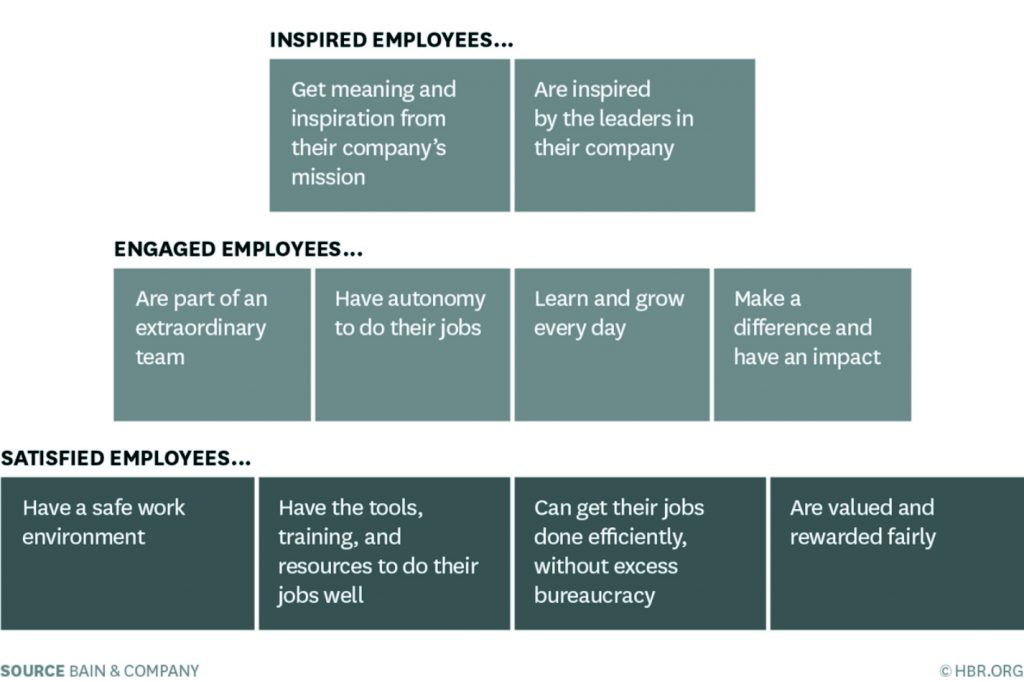
Figure 2: The Performance Pyramid (Source: Bain and Company, 2015; in
Garton and Mankins, 2015)
Asked whether it was possible for training and development initiatives to achieve the highest levels of emotional engagement, David cites a 2016 agreement with the Ministry of Education in Italy to offer short internships for 16-18-year-old students. Every McDonald’s restaurant in Italy is taking part, and they plan to offer over 10,000 internships every year. “I think this is not only a massive statement of our belief in the power of education, in McDonald’s Italy it’s also further elevating engagement and our commitment to workplace learning to the ‘inspiration’ of working for an organization where the creating a culture of opportunity is part of the mission”.
David sums up this theme with reference to the relationship between talent and culture. “Talent is important — but culture is even more important”. Talent throughout the organization is not an end in itself. It is a second order issue; one that can help us achieve our culture shift towards behaviours and attitudes which can help drive our commercial growth.
Diversity and Inclusion
As the discussion turns to this theme some context is again drawn to my attention. The working age populations of many of the world’s developed economies are plateauing or shrinking, while the demand for labour continues to rise. David describes this as the ‘Workforce Cliff’ — “when supply and demand curves meet, organizations will quite simply run out of people to hire. The only way from there is down!” “To respond to this challenge, organizations are beginning to think more broadly about the people they are looking to hire … and this is bringing diversity and inclusion into the mainstream of our organizational thinking”. Broadening the argument out from McDonald’s, David contends for organizations to survive they will need to attract older workers, women returners, people with no or low qualifications, disabled people, people from minority backgrounds, migrants and refugees. All of these groups face significant barriers to entry into the workplace — and all of them frequently experience barriers to development once in employment.
However, all of these groups also have an enormous amount to bring to the workplace … and HR / HRD have a vital role to play in demonstrating to the organization the benefits of employing these individuals.
David argues people metrics are again vital in this and draws my attention to McDonald’s analysis of restaurant performance which shows that restaurants employing one or more people over the age of 60 enjoy 20% higher levels of customer satisfaction than those that don’t. Germany provides an example where the supply of young people into the labour force is predicted to decline significantly in coming years. In an initiative seen as having mutual benefits, McDonald’s are discussing with the German government how it might seek to provide a combined education and employment initiative in relation to the large numbers of migrants and refugees currently moving into Germany.
By aligning diversity and inclusion initiatives with our core organization and business strategies, we will be better able to meet our resourcing requirements but we’ll also be better placed to manage and inspire the multi-generational, multicultural, multilingual workforces of the future.
Technology
In a number of ways, the relationship between HRD and technology has been an undercurrent throughout our discussion. For example, technology enables people metrics, critical to HRD decision making, to be at the heart of the global people strategy; while eLearning and gamification are increasingly important in the delivery of learning and development initiatives.
In 18 McDonald’s Markets much of this online activity is enabled by an employee portal – “ourlounge” — which gives staff a single point where they can access a wide range of information from what they need to know on their first day to online learning. And from details of the next big marketing promotion to the latest employee discounts which have been negotiated by the company with a range of retailers and service providers. The sites also include competitions and, importantly, employee surveys and discussion forums. “The two-way dialogue this enables us to have with our people is invaluable,” David comments “and we’re currently having around 6-million of these conversations every quarter with Crew and managers posting thousands of comments and pictures every day.” Beyond “ourlounge”, McDonald’s is also engaging with staff and customers via social media and using sophisticated monitoring tools to get feedback on key initiatives and to identify potential issues and opportunities.
In terms of technology in training and development, David tells me of a recent visit to a restaurant in London where he donned a new virtual reality headset. This provided a very powerful experience of life in the kitchen and he believes that in relatively short period of time technology like this will become part of everyday workplace training in many of McDonald’s Markets.
I ask what I feel may be a tough question about technology and the nature of work at McDonald’s and which in part relates back to our discussion about ‘inspired’ employees. Citing Martin Ford’s recent book The Rise of the Robots, I ask about McDonald’s use of labour saving technology. Might the organization be entering a period of de-skilling and headcount reduction in its restaurants? The answer is a firm “no”. Technology has a huge role to play in increasing customer convenience, and significant investments are being made in areas such as front-of-house ordering kiosks and mobile ordering. However, the impact of these technologies has been to create new hospitality roles such as at-table ordering and service (i.e.: waiters and waitresses) and “Guest Experience Leaders” (a similar role to the maître d’ in a high-end restaurant).
The McDonald’s example and approach here is important in terms of the bigger picture of how the relationship between people and technology might unfold over coming years. It provides an interesting counter to a body of opinion which sees a likelihood that the accelerating technological applications will remove a wide range of jobs from the economy of both developed and developing countries and confine many to employment drudgery.
Should it be the McDonald’s ‘People Development’ laboratory
As we draw the discussion to a close David reflects on the themes we have discussed and reminds me of his job title … Chief People Officer. It’s a job title, he says, which often makes people smile, but he believes that it reflects the broadening of HR beyond its traditional boundaries and into a wider “People” space. Asked to explain further, David points out that until recently at McDonald’s, HR and Learning & Development at a global level were separate functions reporting into two different members of the senior leadership team. Today they are unified under David’s leadership along with the Diversity & Inclusion team and the teams driving a range of key community-based initiatives (such as the Ronald McDonald House Charities which provide accommodation for families so they can stay close to their hospitalized child at little or no cost) around the world. He also highlights that this more broadly-based People team are now also partnering closely with teams and functions, such as Investor Relations and the Environment team, where even two or three years ago there was little or no involvement.
This resonates with other voices (see for example, Harvard Business Review, July-August, 2015) which are questioning if HR/HRD can ensure the engagement of senior management and investors. Across the board, David concludes, “we are moving into what I call a more inclusive, ‘people space’. I think this can help cement the people function right at the heart of organizational strategy”. So it’s clear that, for David, HRD is highly relevant player within a broader ‘community of practice’ of employee-centred disciplines. Indeed, this final theme of our discussion provides further illustration of the insights which the idea of McDonald’s as an HRD laboratory can offer the reflective and discerning HRD practitioner and researcher.
References
Ford, M. (2015). The Rise of the Robots: Technology and the Threat of Mass Unemployment, OneWorld, London
Garton, E. and Mankins, M. C. (2015). Engaging Your Employees Is Good, but Don’t Stop There, Harvard Business Review, December, 2015
Harvard Business Review, (2015). It’s Time to Blow Up HR and Build Something New; July-August, 2015
Ulrich, D. (2015). The Leadership Capital Index: Realizing the Market Value of Leadership, Berret-Koehler, Oakland
Volume 1, Number 2
- Editorial
- Towards a Model of Learning and Development Practice
- Challenges of Learning in the Flow of Work: Scaffolding Self-Direction
- Reflections on the Relationship Between Mentoring, Female Development and Career Progression: Investment Management Versus Human Resource Management
- Exploring the Benefits of a Coach Development Process … on the Coach