
International Journal of HRD Practice, Policy and Research 2016, Vol 1 No 2: 83-92
doi: 10.22324/ijhrdppr.1.118
Investors in People and Business Excellence in the United Arab Emirates Part 1: Establishing the Link
Alaa Garad, Investors in People, United Arab Emirates
In the context of the United Arab Emirates, the paper explores an emerging synergy between models of business excellence (BE) and the people management framework Investors in People (IIP), within organizational HRD policy and practice. Since the 1990s, driven by the need to enhance international competitiveness, UAE organizations have been encouraged to adopt quality initiatives, often reinforced with prestigious awards. HRD policy and practice has responded accordingly. However, despite its introduction in the late 1980s IIP, an overtly people standard, it is only in recent years that it has begun to be adopted in the UAE. The paper argues that it is by establishing and consciously promoting the links between BE and IIP that provides the basis for the increasing adoption of IIP in the UAE. IIP has been used by UAE organizations to lever effective implementation of BE and lead them toward further learning and performance excellence. This, the first of a two-part article, establishes the strength of the relationship between BE and IIP. Part 2 draws on case study data to highlight the dynamics of the process in more detail.
Introduction
This article attempts to investigate the link between Investors in People (IIP) and Business Excellence (BE) and show how this link has worked in significant HRD policy developments in organizations in the United Arab Emirates (UAE). IIP is a holistic framework for people management established in 1991. The standard defines what it takes to lead, support and manage people well for sustainable results. IIP is considered to be a sign of a great employer, an ‘outperforming’ place to work and a clear commitment to sustained success. The concept of Business Excellence has emerged from several concepts over many years, starting with the establishment of the quality movement and philosophy in Japan, which led to the creation of several approaches and frameworks (see, for example, Evans and Lindsay, 2005). The European Foundation for Quality Management defines Business Excellence as
Outstanding practice in managing the organization and achieving results based on a set of fundamental concepts which will include: result orientation, customer focus, leadership, and constancy of purpose, management by processes and facts, involvement of people, continuous improvement and innovation, mutually beneficial partnership, and corporate social responsibility (EFQM, 2003: 33).
The aim of this article is to consider the relationship between IIP and BE. The paper seeks to demystify any confusion between the two constructs and highlight the links and synergy. Understanding the significance of the links between the two may lead to the development of an integrated model that can help organizations develop their HRD policy and practice to become high performing organizations and achieve strategic organizational goals. The paper considers the evidence of increasing integration in terms of policy application within the UAE. The article begins with a consideration of the UAE context and how excellence-related programmes became crucial to the country’s economic development and advancement. Both IIP and BE are explained and key links considered before an integrated model is introduced. A second paper will provide more detailed case study data from the UAE on how IIP and BE have been applied in an integrated process.
The United Arab Emirates
As the UAE has embarked on business excellence as a strategy for government agencies as well as the private and third sectors, it is useful to shed the light on this journey. The UAE occupies an area roughly the size of Portugal along the south-eastern tip of the Arabian Peninsula. Four-fifths of the UAE is desert, yet it is a country of contrasting landscapes. The current population of the UAE is 9,267,216 which is equivalent to 0.12% of the total world population. The UAE ranks number 93 in the list of countries by population. The total land area is 83,637 Km2 (32,292 sq. miles). with a population density of 287 people per square mile. 89.5% of the population is urban (8,371,435 people in 2016) while the median age in the United Arab Emirates is 33.5 years.
The UAE is a federation of seven emirates: Abu-Dhabi, Dubai, Sharjah, Ajman, Umm Al‑Qaiwain, Ras Al-Khaima and Fujairah. The order in which they are listed here is based on a clockwise progression around the country, starting from Abu-Dhabi, which occupies the southern sector and is also the federal capital. The Federal Government deals with matters of national importance such as foreign affairs, security and defense, nationality and immigration issues, education, currency, postal, telephone and communication services, air traffic control and aircraft licensing, together with certain special topics delegated to it, such as labour relations, banking, the delimitation of territorial waters and the extradition of criminals (UAE Interact, 2016).
Since the early 1990s the UAE has embarked on several initiatives to foster its economy and its competitiveness in the international environment. Excellence-related programmes are among these initiatives. Each one of the seven emirates have established a programme or an award to reinforce the culture of excellence and to bring in the best practices to their organizations. Adopting and implementing quality in government entities has been mandated by the government, i.e. the governmental entities have to conduct self-assessment against the award criteria, which must, then, be submitted for formal assessment by independent assessors, commissioned by the award offices. Table 1 indicates twelve awards developed and offered since 1993. All share characteristics of fundamental principles i.e., adding value to customers, creating a sustainable future, developing organization capabilities, harnessing creativity and innovation, leading with vision, inspiration and integrity, managing with agility, succeeding through the talent of people, and sustaining outstanding results (Figure 1).
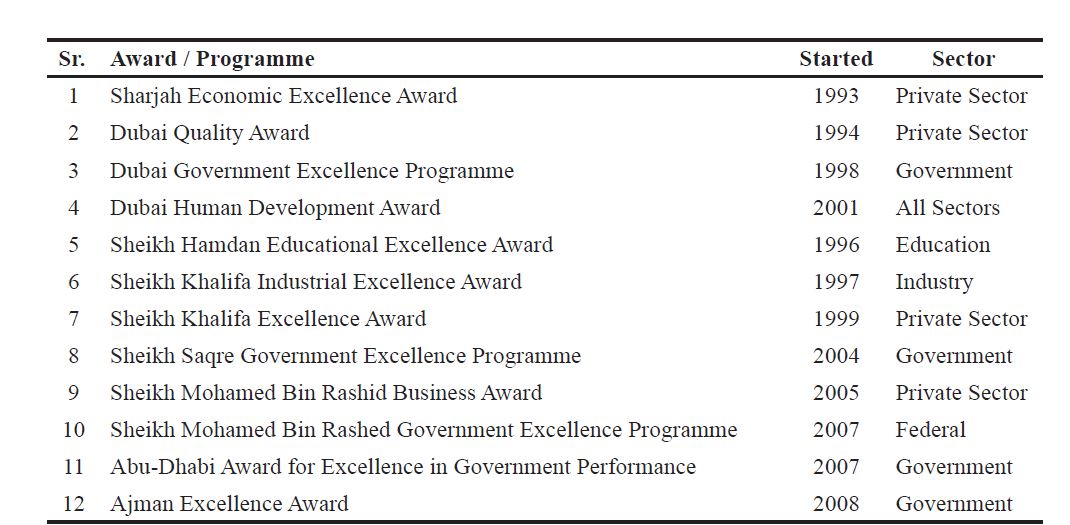
Table 1 – Key Quality and Excellence Awards in the United Arab Emirates

Fig 1- Fundamental Principles of Business Excellence (Source: EQFM, 2012)
Investors in People and Business Excellence
The IIP model/framework
The IIP framework was developed in 1989 and the first assessment conducted in 1991. The standard comprises nine indicators (dimensions). The indicators revolve around the organization’s ambition as a central focus for the organization and are grouped under three perspectives as shown in Table 2.

Source: Adapted from Investors in People Standard (IIP, 2015) Table 2 – Investors in People Indicators
The fourth perspective, the overarching ‘organization ambition’, is illustrated at the centre of Figure 2.

IIP Standard, 2015 Figure 2 – Investors in People Indicators
Examining each of the four perspectives i.e. Leading, Supporting, Improving and Organization Ambition, in more detail:
1) Leading: creating purpose in a changing environment, whilst motivating through change, have become essential skills for many roles. High performing organizations foster leadership skills at every level of the organization to deliver outstanding results. There are three indicators under this perspective that cover the clarity of vision and purpose and how good leaders in the organization inspire employees to perform (IIP, 2015).
2) Supporting: sustainable organizations use flatter structures to enable faster decision-making, agility and customer focus. The three indicators under this perspective cover the way in which people are supported to perform through the way jobs are designed, reward is structured, performance is managed, and the degree of autonomy people have to make decisions (IIP, 2015).
3) Improving: a philosophy of continuous improvement is at the heart of the Standard, It argues that constant adaptation, flexibility and continuous improvement feature heavily in the very best organizations. Furthermore, being a sustainable organization means developing capabilities, resources and plans for tomorrow. “It means fostering innovation to constantly find new ways to achieve the ambition of the organization” (IIP, 2015: 5).
4) Organization Ambition: investing in people is meant to improve performance. Therefore, the aims and ambitions of the organization, are at the heart of the IIP framework. As such the nine indicators are built from an understanding of this ambition to test the alignment of purpose across the employees and the extent to which practices are driving positive results (IIP, 2015).
In early 2016, the sixth version of the standard was launched internationally and this seeks to lever IIP as an Organizational Development (OD) Framework rather a mere ‘’HR’ standard.
According to the UK Commission for Employment and Skills (UKCES) and Investors in People International, there are over 13,500 IIP-accredited organizations throughout the United Kingdom (the Cradle of IIP) plus 631 IIP-accredited organization, spread over 79 countries (announced during the launch of Generation Six of IIP Model on 15th September, 2015).
The BE model/framework
According to Evans and Lindsay (2005), the concept of BE has emerged from several concepts over many years, starting with the establishment of the quality movement and philosophy in Japan, which led to the creation of several approaches and frameworks. Bohoris (1995) stated that several national and regional quality awards have been established to promote quality and serve as models for TQM. Three of the most widely used are the Deming Prize in Japan, the Malcolm Baldrige National Quality Award in the USA and the European Foundation for Quality Management (EFQM) Business Excellence Award. The Business Excellence Model (BEM) (Figure 3) assumes that, in order to sustain excellence, organizations assess and review their approaches and mechanisms regularly and question themselves. Learning is considered a core element in the model’s structure and its assessment mechanism. Auluck (2002) describes the BEM as a powerful tool that assesses organizational performance, provides a framework for identification of improvement areas and offers a process for continuous learning.

Figure 3 EFQM Business Excellence Model (Source: EFQM, http://www.efqm.org)
Clearly there are areas of overlap and commonality between the frameworks of BE and IIP. Table 3 seeks to show the links between IIP and BE on a holistic level; the nine indicators (criteria) that form IIP have been exhibited on vertical axis of the table, while the nine criteria that form EFQM have been exhibited on the horizontal axis. In the matrix a degree of significance is allocated to each intersection. One star means slight significance, two stars means moderate significance and three stars means strong significance. Summing the total number of stars provides a proxy measure of where the link is strongest.
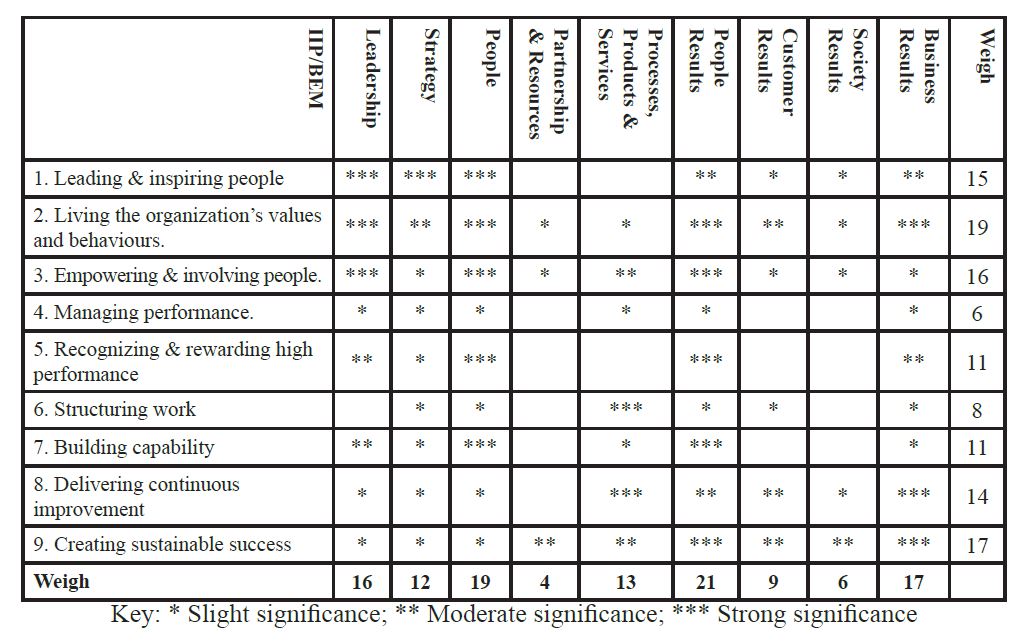
Table 3 – Links between BE Model and IIP Model
Thus from the perspective of Business Excellence the most significant links with IIP are at ‘People Results’ (21), ‘People’ (19), ‘Business Results’ (17), and ‘Leadership’ (16). From an IIP perspective, the strongest relationships with BE are evident at ‘Living the Organization’s Values and Behaviours’ (19), ‘Creating Sustainable Success’ (17), ‘Empowering and Involving People’ (16) and ‘Leading and Inspiring People’ (15). Such links suggest that focusing and prioritizing resources on these specific areas can help organization to optimize its resources, achieve and sustain excellent business results.
Part 2 of this article will seek to bring further clarity and empirical evidence on the relationships discussed above.
Policy Implementation in the UAE
In 2001, the Department of Economic Development in Dubai attempted to introduce IIP in the UAE. However, this initiative was unsuccessful. During this time, the focus of UKCES1 was promoting the IIP model within the UK and there was no mechanism in place to administer the growth internationally. Further efforts, by the author, to promote IIP in the UAE commenced in 2009. Then, in 2011 acquisition of a partnership license from the International Quality Centre2 (based on signed agreement on April 2011) enabled IIP services to be promoted and delivered throughout the UAE. Informed by hands-on experience, as an EFQM assessor and practitioner, the links between IIP and BEM became increasingly apparent. It was felt that IIP could leverage effective implementation of EFQM and lead organizations towards further learning and performance excellence.
Underpinning this promotion was the link between IIP and BEM, developed above. IIP fits into the quality awards and the most common business frameworks and tools that are adopted in the UAE and other Gulf Countries. This is because of its focus on people and the consideration that people’s engagement is a critical success factor in change and improvement initiatives (see also Figure 4). It will be noted that the Figure includes several of the awards outlined in Table 1 and adds other significant quality and business assessments, such as ISO 9001 and six sigma.
Thus, in 2011 IIP had its formal introduction to the region which led to the promotion of the standard throughout the UAE. When presented to the Department of Economic Development, with the links between the BEM and the IIP framework highlighted, it received high attention and support. This support was translated into establishing the UAE Award for Investing in People. Some of the key government leaders decided to implement IIP jointly with EFQM in their organizations. Departments involved include the: Emirates Identity Authority, the Ministry of Infrastructure, the Dubai and the Abu Dhabi Police, the Abu Dhabi Accountability Authority, the Dubai Chamber of Commerce, Dubai Water and the Electricity Authority and Department of Transport.
The motive for public agencies to adopt IIP was to use it as an enabler towards effective implementation of a European Foundation for Quality Management (EFQM). IIP aligns with BEM especially in relation to the EFQM factors of Leadership, Strategy, People, People Results, Key Results and Society Results and which form approximately 60% of EFQM criteria.

Figure 4 – IIP as a Strategic Fit with other Business Excellence Frameworks and Tools
The business result at the above mentioned public agencies such as the Ministry of Culture and Knowledge Development, the Ministry of Infrastructure and the Emirates Identity Authority have been impressive and led to them receiving the highest government recognition represented in Sheikh Mohamed Bin Rashid Government Excellence Award and Dubai Government Excellence Program Award. The interest in IIP has not been limited to government agencies but has also been widely adopted by the private sector especially in hospitality, education and healthcare sectors. Since its inception in the UAE, over 40 organizations has embarked on IIP, twelve of them have attained and sustained the accreditation while as of today there are 23 companies working with IIP and in the pipeline for assessment.
The emerging success of IIP in the UAE can be attributed to seven key factors:
- Support and commitment towards investing in people and excellence by leaders at government agencies.
- Awareness of policy-makers about adopting system thinking approach.
- Strong belief that ‘it is all about people’.
- Simple process of diagnosis and implementation of IIP where there is no ‘piles’ of paper work or ‘ticking’ the boxes kind of work.
- Availability of Arabic translation of the model and its requirements.
- High maturity of the business atmosphere due to using EFQM criteria and tools which helped in fast understanding of IIP requirements and its links with EFQM and other business excellence instruments.
- The focus on organizational learning that led to enhancing business performance and growth.
Towards an Integrative Model
At this point in the development of an integrative link between IIP and BE one illustration is made to capture the link in term of actual organizational policy and practice. In February 2016 The Millennium Corniche Hotel in Abu Dhabi committed to IIP. It recognized that IIP could both consolidate and further advance the hotel’s policy of continuous improvement. According to the hotel’s General Manager:
We have used IIP to cement our hotels strive for continuous improvement. Alongside IIP, using internationally recognized accreditations such as ISO 9001/14001/18001/22000, we are striving to achieve a stable culture of quality assurance and excellence. In an increasingly unstable market, locally and internationally, the implementation of these established quality initiatives allows us to continue on our journey of excellence.
The Hotel not only achieved IIP accreditation in 2016 but also won the international IIP Newcomer Award for 2016. The hotel has adopted IIP as they found it the right approach to “cement” what they had accomplished in quality management and business excellence. One of the major gains of adopting IIP, was the focused Learning and Development activities through direct alignment to the hotel strategic objectives. As an example the hotel invested approximately AED 50,000 in ‘cross-selling’ programmes which resulted in AED 600,000 revenue. Measuring the investment in Learning and Development is a requirement in both domains, i.e. IIP and BE.
When identifying and establishing areas requiring improvement and planning rectification, we realized that IIP would be a great mechanism to drive positive change as well a platform to further educate our people and develop their thought process — IIP has allowed to us to understand and communicate the value gained from investing in Learning and Development (IIP, 2016).
If we assume that the two components (IIP and BEM) are working together as gears to leverage high performance in UAE organizations, the challenge is to further understand the dynamics of the motion of these gears, which gear impacts the others, how, when and why (Figure 5).
 Figure 5 – The Two Gears; BEM and IIP
From a policy and practice point of view, those areas of significant links among the standards should be the focus for organization’s senior management for sustainable excellence and growth. From a research point of view, the same areas should be subject for generating empirical evidence. The relationship developed in this article paves the way for an integrated model that brings together ‘people’ and ‘excellence’ in the UAE context. It is important also to further investigate the dynamics of the linkage, the cause and effect relations, which standard leverages application of other standards and what are the factors that influence the successful application of those standards. This will be the subject of Part 2 of the paper which will use a number of case studies in three key sectors of the UAE economy (i.e. Government, Education and Hospitality) in order to further explore and illustrate the working of these dynamics.
Notes
1. United Kingdom for Employment and Skills Department (the owner of the IIP model).
2. The International Quality Centre is the sole licence holder for the administration of IIP overseas.
References
Auluck, R. (2002). Benchmarking: A tool for facilitation of organizational learning, Public Administration and Development, 22(2): 109-122.
Bohoris, G. A. (1995). Comparative assessment of some major quality awards, International Journal of Quality and Reliability Management. 12(9): 30-43.
European Foundation for Quality Management (EFQM) (2003). The EFQM Model, EFQM, Brussels, Belgium.
European Foundation for Quality Management (EFQM) (2012). www.efqm.org (accessed: 15th May 2016).
Evans, J. and Lindsay W. (2005). The management and control of quality (6th edn.). Singapore: Thomson.
Investors in People (IIP) (2015). Investors in People; the Standard, UK Commission for Employment and Skills, UK.
Investors in People (IIP) (2016). Case Study of Millennium Corniche Abu Dhabi, available at: www.investorsinpeople.com/resources/case-studies/millennium-corniche-hotel (accessed on 20th September 2016]
UAE Interact (2016). www.uaeinteract.com [Accessed on 3rd July 2016]
UK Commission for Employment and Skills (UKCES): www.gov.uk/government/organisations/uk-commission-for-employment-and-skills (accessed on 10th June 2016]
The Author
In addition to his engagement with Investors in People UAE, Alaa Garad works as an Assistant Professor at Abu Dhabi University. He holds a Bachelor of Commerce, a Master’s Degree in Quality Management and a PhD in Organisational Learning. Alaa is an Accredited EFQM Assessor, IIP Specialist, Chief Examiner and Juror for several national and regional quality awards such as Sheikh Khalifa Excellence Award, Dubai Quality Award, and King Abdul-Aziz Quality Award in Saudi Arabia. He is a member of the Academy of Management, and the American Society for Quality and a Founding member of the Egyptian Association for Learning.
Volume 1, Issue 2
- Editorial
- Towards a Model of Learning and Development Practice
- Challenges of Learning in the Flow of Work: Scaffolding Self-Direction
- Reflections on the Relationship Between Mentoring, Female Development and Career Progression: Investment Management Versus Human Resource Management
- Exploring the Benefits of a Coach Development Process … on the Coach
- The Impact of the Economic Crisis upon Human Resource Development (HRD): Evidence from two Greek Banks
- Investors in People and Business Excellence in the United Arab Emirates Part 1: Establishing the Link
- HRD Forum: McDonald’s: an HRD laboratory?
- HRD Forum – HR Analytics — Turbo Charged or Stuck in Neutral?
- HRD Forum: Book Review | Harry Potter and the Scholar-Practitioner
- Request for Feedback
- IFTDO and UFHRD Awards